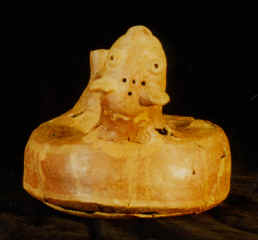
The purpose of this initial firing is to turn your pottery into ceramic material.
Open firing ceramics definition.
When it comes to bisqueing in essence the noun refers to any sort of pottery that you ve fired once and that has nothing chemically bonded in terms of water left within the clay.
Failure to do so could cause the piece to burst putting you back at square one.
To the human eye pots and other clay objects do not look melted.
The melting that occurs is on the molecular level.
If you can have the students take a look at the loaded kiln before the firing and then again when you open the lid.
A modern technical definition is a vitreous or semi vitreous ceramic made primarily from stoneware clay or non refractory fire clay.
Click on the image to the left to see the vitrification process.
It s important that the temperature rises slowly and cools slowly.
While it is true that pottery fired outdoors breaks more often than pottery fired in a kiln the breakage rate can be drastically reduced by taking certain precautions.
The final aim is to heat the object to the point that the clay and glazes are mature that is that they have reached their optimal level of melting.
When loading the kiln it is important to handle the pieces carefully so the glaze does not come loose.
In essence it s already been fired once and you re just going to put the glaze on it in order to fire it again.
A very fluid slip of high specific gravity obtained by deflocculation and used for forming ware using the casting process.
Stoneware is a rather broad term for pottery or other ceramics fired at a relatively high temperature.
It may or may not be glazed.
Whether vitrified or not it is nonporous does not soak up liquids.
The goal of bisque firing is to convert greenware to a durable semi vitrified porous stage where it can be safely handled during the glazing and decorating process.
When the ceramic is fired a process known as vitrification takes place whereby the glass phase liquefies and fills the open spaces between the particles.
Firing is the process of bringing clay and glazes up to a high temperature.
The pre firing of a ceramic material to remove all moisture and burn off any oxides and gases.
When the body cools the glass solidifies and acts to bond the unmelted particles together.
Ceramic work is typically fired twice.
The glaze firing is the most exciting part of the process for a lot of people.
The firing process is measured in cones a standard unit of measurement that accounts for time and temperature.
This is where the magic happens.
It is bisque fired and then glaze fired.
Both of these issues are easily dealt with.